
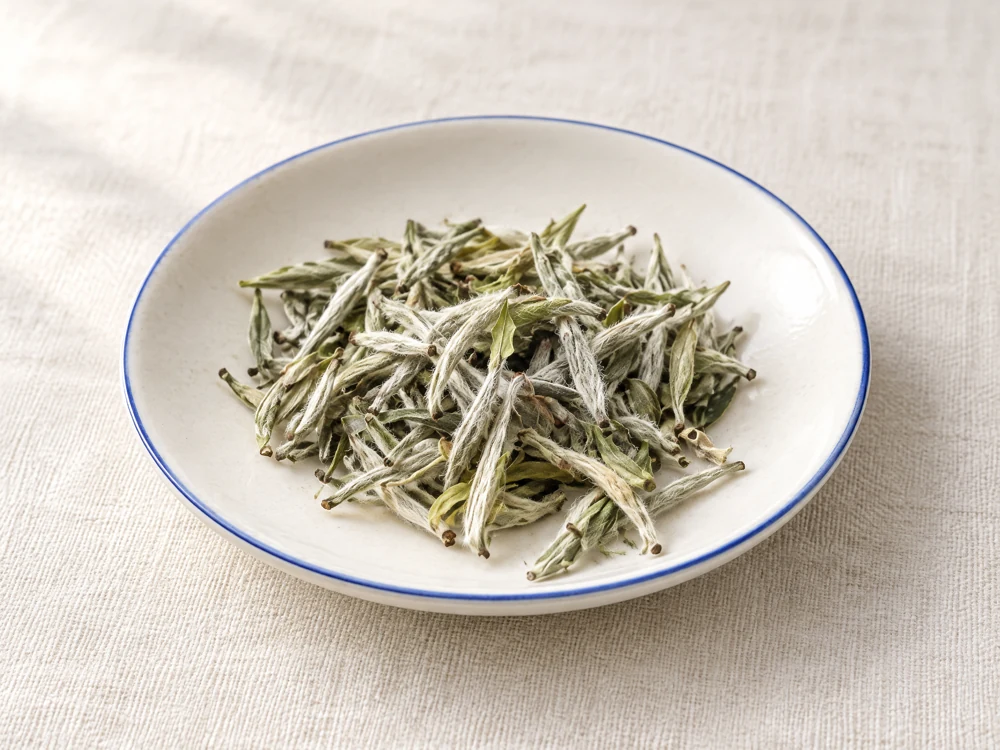
White tea can first be understood by looking at the harvested material and the appearance of the finished tea. Silver Needle is made mostly from plump buds; White Peony consists of buds and leaves; Shou Mei has a higher proportion of leaves. These are styles of white tea products, not tea cultivars. They are not simply ranked from better to worse, but each has its own character in aroma, mouthfeel and brewing performance.
First, consider the material and picking standard
White teas with a higher proportion of buds tend to emphasise downy fragrance, freshness and a delicate mouthfeel; as the proportion of leaves increases, the aroma and flavour tend to become fuller. When tasting, observe the proportion of buds and leaves and the naturalness of the dry leaves’ colour, as well as the elasticity and intactness of the infused leaves.
Then consider origin and craftsmanship in relation to flavour
Even within the same style of white tea, growing conditions, harvest season, withering and drying methods all make a difference. Rather than asking only “Which one is best?”, develop a comparative tasting method: record aroma, first impression on the palate, mouthfeel, lingering finish and how many infusions the tea will yield, then identify the style of white tea you prefer.